Bathroom as a luxury refuge

Axor Massaud bathroom.

From its base in the heart of the Black Forest, Hansgrohe makes precision bathroom products for the world. David Killick pays a visit.

Hansgrohe is a unique company: one with small-town roots that remains dedicated to the local community in which it began - and one that cares about is workers. Based in Schiltach, a small village nestled in the heart of Germany's Black Forest, its approximately 3100 employees work at three sites spread along the valley. At least one ruined castle perches on the pine-covered hilltops. Half-timbered buildings line the village streets. The landscape is green and lush, and pure water tumbles from the mountains into the stream that meanders along the valley floor.

Hans Grohe senior launched the company in 1901. Until World War II it made tin plate, then after the war switched to bathroom products. Son Klaus and grandson Philippe, now a director, still live in the village. Nature still inspires. Eye- catching photos of bathroom products and models, including one of Klaus taken in the late 60s, adorn the walls of the "Aquademie". All were taken in the area.

For all its quiet rural setting, Hansgrohe is a world company with exports to all main markets. Sales in 2009 topped 610 euros million (NZ$1.1 billion) - a healthy result despite the recession. Compound annual growth rate was 13 per cent (2009). Between 2003 and 2008 turnover doubled. The company has also opened a factory in China, but this manufactures only for the domestic Chinese market, not for export.

Hansgrohe also produces the exclusive Axor designer range. There is some confusion between Grohe and Hansgrohe. Although originally owned by the same family, Grohe split in the late 1960s and is a separate company.

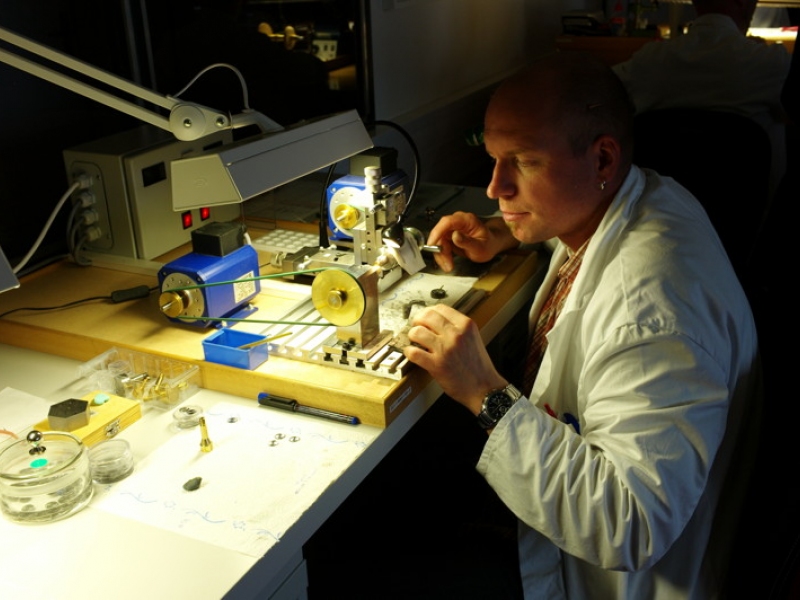
Hansgrohe products are undeniably high end, but cost is not prohibitive. Prices range from 30 euros for a standard fitting through to 3500 euros for a top designer product by Axor. Even lower cost products are well made, explains senior manager Dr Nicholas Matten, who has a doctorate in engineering. Products are built in high-tech factories with typical German precision and almost obsessional attention to detail. Three examples: plastic shower attachments are coated with a layer of copper before chrome is applied. You don't see the copper but if it wasn't there the chrome would wear off after a few years. Something to keep in mind when you look at cheap imports. Another example is the way you adjust shower thermostats for precise temperature. At 38 degrees Celsius there is a safety cutout. You depress the regulator and rotate for hotter temperatures. Controls operate with satisfying precision. It's something you are probably not aware of until you compare other models.

Yet another example of technical innovation is the fully-integrated, maintenance-free thermostat that can be built into a wall. Such details make the difference between a good product and a great product, says Matten.

The other key feature that sets Hansgrohe apart is the emphasis on design. Top bathroom designers include Philippe Starck, Antonio Citterio, Jean-Marie Massaud, and Patricia Urquiola - who has brought a new female perspective to bathroom design. "I want to try to improve people's quality of life, " says Philippe Grohe, who runs workshops with designers. "People are in need of wellbeing. Water is an amazing medium to relax. You need only 30 seconds to be clean; four to five minutes and you feel different."

We see many of the designs at the Aquademie, including the fascinating bathroom museum. Exhibits range from early bathrooms (where water had to be fetched), splendid copper bathtubs from the turn of the 20th century, through to practical space-saving bathrooms of the 1950s, hot psychedelic colours of the 70s, and smart displays and sleek looking fittings of the 21st century bathroom. The elegant lines of the Pura Vida range are among the very latest. It's tempting to imagine what bathrooms will look like in 20 or 50 years time. The Aquademie is also very much hands-on, and a magnet for visitors, especially children, who love turning on the showers.

In Showerworld our group of journalists strips off and pulls on swimsuits and we get to try the showers for real. Hot water gushes from the massive metre-diameter overhead Raindance; body jets massage and invigorate; a fine drizzle of water leaves us feeling relaxed and at peace with the world. Showering is a civilised experience. There's even soap and shampoo. It's all good clean fun.

Recycling plays a big role in bathroom production. Solar photovoltaic panels cover factory roofs, and a solar tower generates extra electricity. Research and development is under way into reusing spent "grey water" and harnessing the heat from the water that disappears down the plughole. Already some showerheads maximise efficiency so you get a comfortable shower while saving water. Consumption ranges from a meagre five to seven litres a minute through to 30 litres for the luxurious Shower Heaven.

What's next? Phillippe Grohe says sustainability and the environment are important for the future. "Architects have a longterm perspective; not fashion. That's important for bathrooms."

One of the biggest trends in design will be in using natural products. He does not believe in bringing in technology, like computers, for the sake of it. "We believe a bathroom should be a place without a TV. I see the bathroom as a refuge."